The Canvas Breach: When Your Schools Vendor Becomes the Single Point of Failure
On April 29, 2026, attackers got into Instructure, the company that runs the Canvas learning management system used by roughly 9,000 schools, colleges, and universities worldwide. By May 3 the threat group ShinyHunters had publicly claimed the breach. By May 7 the FBI was telling families to expect direct contact from people claiming to have their data. Almost every K-12 district and higher-education institution that uses Canvas, including most of the largest in the United States, is sitting in this story. So are the parents of every student in those institutions.
This is the second time Instructure has been breached in eight months. The first one happened quietly. This one will not.
What Happened
The attack landed in two waves.
First wave, April 29-30. ShinyHunters exploited a vulnerability tied to Instructure's Free-For-Teacher accounts and pulled data out of Canvas databases. Instructure shut down parts of the platform, including Canvas Data 2 and Canvas Beta, while it investigated. On May 2, Instructure's chief information security officer Steve Proud posted a status update that said, in plain words, "we believe the incident has been contained."
Second wave, May 7. ShinyHunters got back in. Canvas, Canvas Beta, and Canvas Test all dropped into maintenance mode. The company quietly rolled out emergency patches under that label while finals week was happening at hundreds of campuses across the country. The phrase "scheduled maintenance" did a lot of work in the public-facing notices.
In the ransom note ShinyHunters posted on May 3, the group claimed it had data on roughly 275 million individuals and access to billions of private user messages. They set a deadline of May 12, 2026. Pay or everything leaks.
What Was Actually Stolen
This is where it pays to read carefully.
According to Instructure's CISO, the confirmed data taken includes names, email addresses, student ID numbers, and the contents of messages users sent through Canvas. The company also said it has no evidence that passwords, dates of birth, government identifiers, or financial information were stolen.
That distinction matters. A name plus an email plus a student ID plus a message thread is not enough to drain a bank account. It is more than enough to send a parent a convincing email that names their child, references a real assignment, and includes a payment link that looks like it came from the school.
That is the threat the FBI is warning about, and that is the threat parents and administrators need to prepare for now.
"Contained" Wasn't Contained
Look at the timeline again.
- April 29-30: initial intrusion
- May 2: "we believe the incident has been contained"
- May 7: the same group is back inside, the platform goes into maintenance, emergency patches are pushed
Five days passed between the company's public assurance and the second compromise. The patch fixed the symptom. The access path was still open.
This pattern is not unusual. It is how breaches actually behave. The first detection finds the foothold the attacker used to take what they wanted. The second detection finds the persistence mechanism the attacker installed so they could come back. Most organizations only catch the first one.
For schools and districts that took the May 2 statement at face value and went back to business as usual, the next five days were a very expensive lesson in what "contained" actually means in the early hours of an active investigation.
The Extortion Playbook to Watch For
The FBI Cyber Division issued a public statement on May 9 that said the FBI is aware of the disruption and specifically recommended that anyone contacted directly by people claiming to have student data should report it rather than respond.
Investigating cases like this for a decade, the contact pattern is consistent. It runs in three stages.
Stage one: ransom the institution. The attacker tells the school district or university that the data will be leaked unless a payment is made. The school's IT, legal, and leadership try to keep this quiet while they decide what to do.
Stage two: pressure the institution by going around it. This is the move that surprises people who have not seen it before. The attacker contacts students and parents directly, by email or text, often using personalized details lifted from the stolen messages. The implicit message is pay us or we will keep doing this and your administration will have to explain why they did not protect you.
Stage three: monetize the data. Whether or not the school pays, the data ends up on criminal markets and feeds the next round of phishing, account takeover, financial-aid fraud, and synthetic-identity scams against the same population.
The parent-contact tactic is what creates the political pressure to pay, and it is what creates the immediate risk that families need to be ready for. The next phishing email a parent receives might know their kid's name, course schedule, and most recent message to a teacher.
What Schools and Districts Should Do This Week
Pulled directly from how these incidents unfold, in the order they actually matter.
1. Tell parents what happened, in plain language, before someone else does. The single biggest predictor of how badly an extortion campaign hurts an institution is whether the families heard it from the institution first or from the attacker. Send a clear, short notice. Name what was taken. Tell them what the school will and will not ask of them by email.
2. Establish a single trusted contact channel. Pick one phone number and one email address. Tell every parent and student that anything else is suspect. Repeat it. Put it in the email signature of every staff member.
3. Audit account access broadly, not just for Canvas. ShinyHunters and groups like them reuse stolen credentials. Any school account that shared a password with a Canvas account is now at risk. Force a password reset and turn on multi-factor authentication on email, finance systems, and the student information system, not just the LMS.
4. Brief every employee on the parent-contact pattern. Front-office staff, teachers, registrars, and financial-aid offices are going to start getting calls from "concerned parents" who are actually attackers gathering more information. Train the script: we will call you back at the number we have on file.
5. Document the timeline now. When the lawsuits, audits, and insurance claims start, the side with the paper trail wins. Write down what you knew when, who you told, and what action you took. Date everything.
What Parents Should Do This Week
Two things, both simple.
1. Treat any email or text claiming to be from your child's school with extra suspicion until further notice. Especially anything that asks for payment, personal details, or a password reset. Pick up the phone and call the school directly using the number on the school's actual website. Not the number in the email.
2. Talk to your kids. Tell them the school's data may have been stolen and that strangers might try to contact them pretending to know them. They are a target now. The kindest version of this conversation is the one you have before they get the message.
The Bigger Lesson: Vendor Concentration Is a Cyber Risk
Step back from the specific incident and the shape of the problem becomes clear.
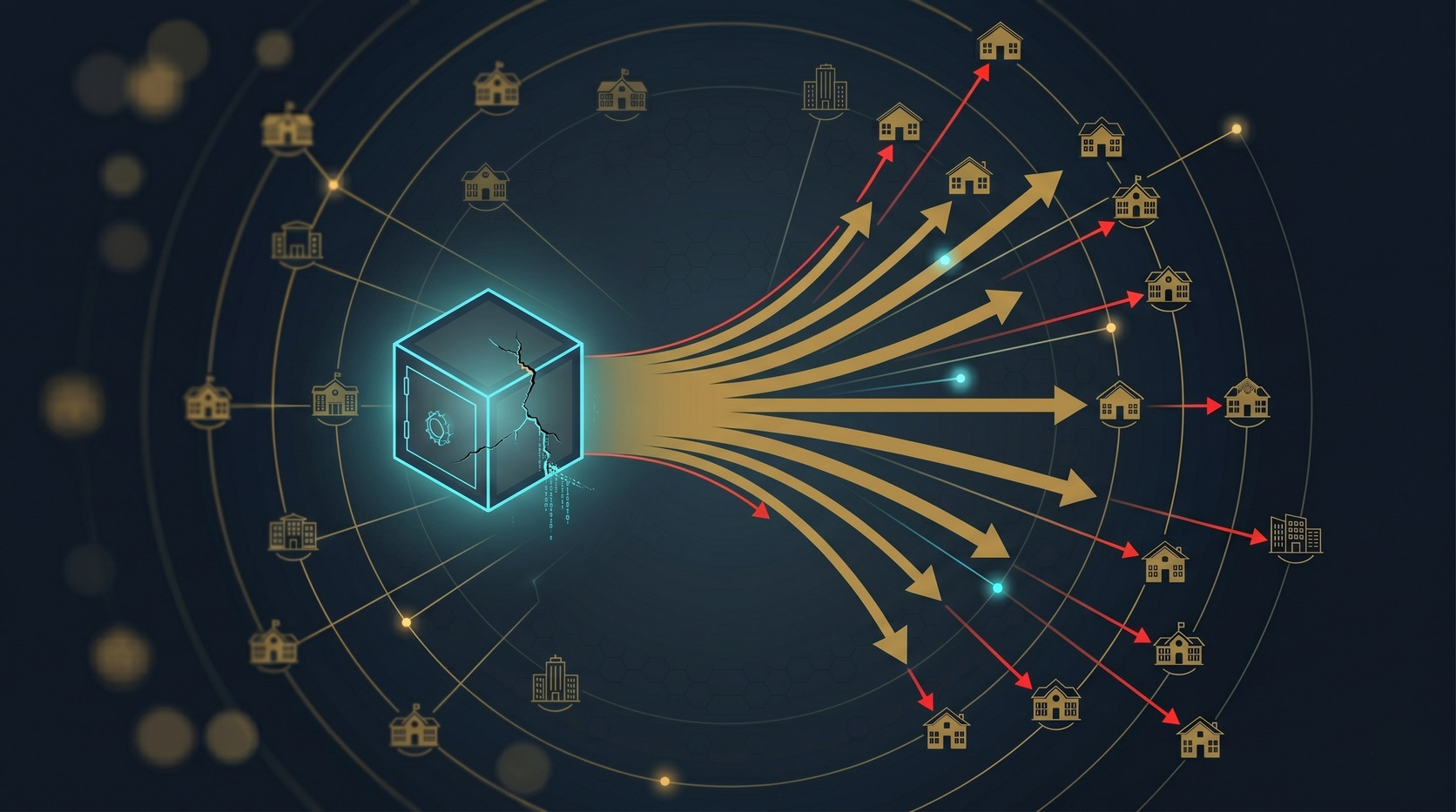
Nine thousand institutions, on five continents, all running on a single vendor's platform. When that vendor gets compromised, every customer is compromised at the same time. The attacker does not need to find a way into Rutgers, the University of Michigan, the University of California, Duke, and 8,995 other schools. The attacker only needs to find a way into Instructure.
This is a small-and-mid-sized-business problem too. Most SMBs run their entire operation through a stack of perhaps a dozen vendors. Email, payroll, CRM, accounting, file storage, video conferencing, password management, customer support, payment processing. A breach of any one of them is a breach of you. The vendor's incident response team becomes your incident response team. The vendor's communications timeline becomes your communications timeline. The vendor's definition of "contained" becomes your definition of "contained."
The good news, again, is that the basics still work. Multi-factor authentication on every account. A different password for every system. A short list of which vendors hold which categories of data. A plan for what you tell customers, employees, students, or parents if any one of them goes down. The schools that take this Canvas breach and use it to harden their own posture will come through the next one with a lot less damage. The ones who treat it as someone else's problem will live this story themselves.
The Canvas breach is a warning. It will not be the last one.
Sources
- Instructure Status (Canvas), CISO Steve Proud statement, May 2 and May 7 updates: Instructure status page
- ShinyHunters compromise reporting: DataBreaches.net, "Developing: ShinyHunters Hacks Instructure Again; Canvas Down", May 7, 2026
- General overview and student impact: TIME, "What to Know About the Canvas Cyberattack That's Affected Thousands of Schools", May 8, 2026
- Vendor-dependence analysis: Dark Reading, "Instructure Breach Exposes Schools' Vendor Dependence"
- Personalized-phishing risk for affected users: Times Higher Education, "Personalised phishing attacks likely after global Canvas hack"
- FBI Cyber Division public statement: @FBICyberDiv on X, May 9, 2026
- Institutional response examples: Rutgers IT alert, University of California UCnet alert, University of Michigan Safe Computing
- Reference summary: Wikipedia, "2026 Canvas security incident"